
Choosing between ceramic and melamine plates is one of the most critical decisions that directly affect cost, durability, logistics, labor efficiency, and customer satisfaction.
Many buyers inquire:
Which material is more suitable for business applications—ceramic or melamine?
Which option offers greater longevity?
Which provides higher cost savings?
Which is more practical for frequent use?
With over two decades of experience in raw material of melamine production, Quanzhou Huafu factory will provide a full comparison of ceramic and melamine plates, including material, performance, cost, and lifespan.
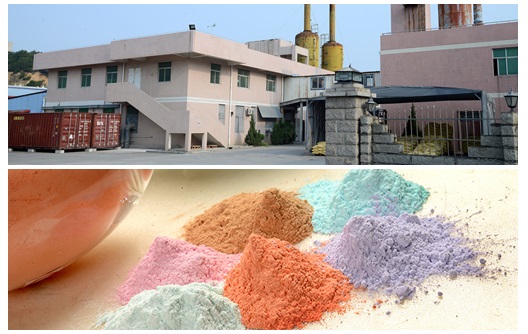
1. Material & Production: Core Structural Differences
Melamine Plates: Melamine tableware is produced from A5 melamine moulding compound under high temperature and pressure, resulting in a dense, stable, non-porous internal structure. This production method imparts strong resistance to impact, corrosion, and deformation.
Ceramic Plates: Ceramic is made by mixing natural clay with mineral materials, shaping, glazing, and firing at high temperatures. While hard, ceramic has low toughness; it is brittle and prone to damage from slight impact or pressure.
2. Durability & Breakage:
Melamine plates are nearly unbreakable, providing excellent drop and impact resistance for demanding environments. They remain intact even with heavy daily use. Their edges are designed to resist chipping during routine stacking and collisions, ensuring long-lasting reliability in busy commercial settings.
Ceramic plates are highly fragile, breaking or chipping easily when dropped, stacked, or cleaned roughly. In commercial settings, this fragility results in a 10%–20% monthly breakage rate, with many plates discarded within 6–12 months due to damage—despite their much longer theoretical lifespan.
3. Weight Comparison:
Melamine is a lightweight, easily carried and stacked material that reduces staff fatigue during long hours and lowers shipping costs for importers.
Ceramic products are heavy, increasing labor intensity during handling, raising freight costs, and posing a higher risk of breakage during handling and stacking.
4. Service Life: Real Commercial Lifespan
Melamine plates (A5 grade) have a reliable lifespan of 3–8 years and maintain good condition for 4–5 years in busy restaurant environments. Replacement is typically needed only when the surface shows slight wear.
Ceramic plates have a theoretical lifespan of 5–10+ years, yet in practice they are typically replaced every 6–18 months due to breaking, chipping, or cracking.
5. Food Safety & Heat Performance:
A5 melamine is 100% food grade and fully complies with FDA, EU, and LFGB standards, making it suitable for serving hot food, soups, and drinks but not intended for microwave or oven use.
Ceramic is a food-grade material that is safe for use in microwaves, ovens, and other high-temperature environments; however, it becomes very hot during heating and can cause burns, so users should handle it with care.
6. Cost Analysis:
Melamine provides a strong economic advantage through lower unit costs and reduced shipping expenses. Its exceptional durability minimizes breakage loss and necessitates less frequent replacement, resulting in higher long-term savings for any project.
Ceramic products have higher purchase and shipping costs, and high breakage loss causes frequent reorders, resulting in significantly higher long-term costs.
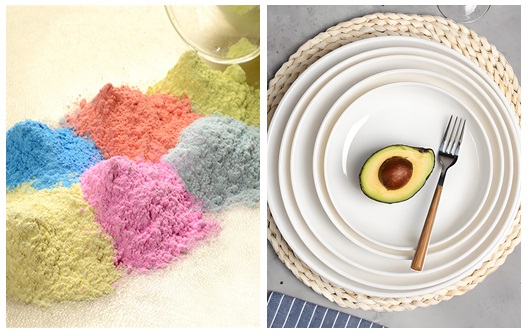
With Taiwanese technology, Huafu Chemicals only manufactures 100% pure melamine molding powder. If you are looking for stable, food-grade, long-life melamine raw material, our expert team supports you with professional data, test reports, and factory-direct support. Any inquiries, please send us an Email: melamine@melaminecn.com.
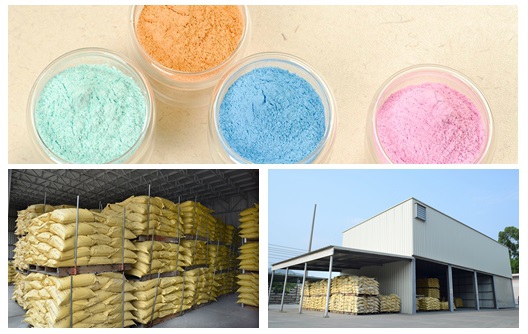
FAQ:
Q: Is melamine food safe?
A: Yes — A5 melamine meets FDA and EU food contact standards.
Q: What are the payment terms?
A: The regular payment terms are L/C, T/T.
Q: What is your MOQ?
A: Our minimum order quantity is 1 Metric Ton.
Q: Can I get free sample before I purchase order?
A: Sample is free. 2 kg sample powder. Customers require samples, 5kg or 10kg powder samples are available. The courier charges will be collected from the customer, or they may pay the cost in advance.

Manufacturer of 100% Pure Melamine Molding Compound with Stable-High-Quality for Melamine Tableware


